Showing posts with label Visit India. Show all posts

Thursday, December 11, 2014

The Fatehpur Sikri

The Fatehpur Sikri

The Fatehpur Sikri was established by great mughal emperor Akbar in 16th century. It was a tribute to renowned sufi saint, Sheikh Salim Chishti. It is said that Akbar walked barefooted from Agra to Fatehpur Sikri seeking the heir for the Mughal Empire and Salim Chisti predicted a male heir. And the prediction of the saint came true and Akbar was blessed with a son. Akbar named his son 'Salim' after the Sufi saint.

It is located at 40 kilometres from Agra. The credit of visiting the city goes to my father who was very keen on visiting the city. And though I was not much interested in visiting this city after the exhausting Agra trip a day before, I loved the city. We headed to Fatehpur Sikri Fort complex which is dotted by several architectural marvels soon after our breakfast.


Though our guide gave a lot of information but only few seemed true. The first place we saw was Diwan-e-aam, the hall of public audience that was used for public meetings and celebrations; its construction is very much similar to Diwan-e-aam of Red Fort of Delhi. Then we headed to Diwan-e-khas, the hall that was used for private meetings, there is a beautifully carved pillar in the centre of this hall. One very interesting thing in front of the Diwan-e-khas, is a life-size board for a game of Pacchisi (a precursor to Ludo), where human figures were used as the pieces and were moved by the direction of its players. What royalty and grandness the Mughals lived their life in.


Then we headed to the three small structures. Our guide said that since Emperor Akbar had three favourite wives, one of whom was Hindu, one Muslim and one Christian, he built one palace in name of each of his wives. Though I have never read this version of story in any of the Mughal books I have read.

Panch Mahal, whose photo is shown in the tourist book’s pages is a five storeyed building a place for recreation and relaxation for the royal family. The structure has been so designed that each story is pillared and is smaller than the other as you move upwards. Though now it is not allowed to climb up this structure. While no less than 84 columns support the ground floor, the uppermost domed floor has only 4 columns. The whole structure is only pillared without any enclosed wall and hence very airy. It is said that it was styled to give relief from the scorching summers of Agra and never used for residential purpose.


The Turkish Sultana’s House is one of the most ornamented buildings of this complex. Each and Every inch of this building is beautifully carved and designed. Though there is not much story about who Turkish Sultana was, but our guide said she was one of the wives of Akbar. It is a small structure surrounded by a verandah, but designed very intricately.


Just adjacent to the Turkish Sultana’s House is Anup Talao. This is actually a pool with a raised platform built by red sandstone and surrounded by stone jalis in its centre. There are four paths from four directions that connect this raised platform to the sides of the pool. Our guide has one more story to say about this pool, don’t know how much it is true. But according to our guide- this pool was once filled with coins and ornaments during the Mughal Era and when the rays of sun falls on this pool it created a visual treat. Today, despite being a part of world heritage the water in the pool is dirty and no one can enter the raised platform in the centre of the pool.


Then there is Jama Masjid and Sheikh Salim Chisti’s Tomb. The Jama Masjid is a beautiful and grand masjid. There are two entrances for this masjid, one is from Buland Darwaza, through which we entered and other one is through The King’s Gate (Badshahi Darwaja). It is said that Bulund Darwaza is said be raised in 1602 AD to celebrate Akbar’s victory over Gujarat. We entered through Buland Darwaza. 


The Sheikh Salim Chisti’s Tomb is one of the most revered Sufi shrines of India. People from all religions come here to seek blessings and it is believed that their wished will be granted. And though all the other structure of this complex is made of red stone, the tomb is made of white marble. It is enclosed by beautiful marble jalis where people tie thread and ask for the blessings of the Sufi saint. This tomb is very serene and beautiful.


Fatehpur Sikri remained the capital of Mughal Empire during the era of Akbar for 14 years. But then due to the acute water shortage in the region, it was abandoned by Mughals. 


Monday, November 24, 2014

The Taj Mahal & Agra Fort


Agra

Amidst the hustle and bustle of the busy city, lies one of the most visited and photographed monument of the world. Yes, I am talking about none other than the Taj Mahal. The symbol of love, Taj Mahal is located in the historical city of Agra that lies just 200 km from Delhi. And though I have visited there twice, I will visit the city again (and then I will post better pics). I always knew Agra was a centre of power during the time of Mughal rule, after reading a book recently on Mughals I realized a lot of politics and power revolved around Agra and hence this post.

The 197 km Delhi- Agra expressway is a smooth and easiest way to reach Agra from Delhi. In 2 hours we reached Agra and that too was a comfortable and pleasurable drive with two halts in between. Though most of the times I prefer a journey from train, this expressway is recommendable for a road journey.

Our first destination in Agra was Agra Fort. Personally I felt the magnificent Agra fort is quite underrated. I loved the fort more than Delhi’s Red fort. This architectural beauty was built by Akbar between 1565 and 1574, who chose Agra as his capital. Built of red-sandstone fort, on the bank of the Yamuna River it is spread in 2.5 kilometers. This fort houses number structures and masjids. There is a city within a city in this fort. Diwan-Khas, Diwae-e-Aam, Moti Masjid, Nagina Masjid, Sheesha Mahal are some names that I remember. Most of them are made of red sandstone or marble, and has beautiful carvings on it. If you are fond of Mughal architecture like me then you are going to love this fort. There is serenity, calmness and most importantly the royalty in this fort, which makes it worth visiting.


Though there are versions of stories told by guide there, only few sounded real. So, I would suggest all the visitors not to trust the guides there. The only real story told by our guide was of Musamman Burj and Khas Mahal, the magnificent white-marble octagonal tower and palace where Shah Jahan was imprisoned for eight years until his death in 1666, and from where he could gaze out at the Taj Mahal, the tomb of his wife. When he died, Shah Jahan’s body was taken from here by boat to the Taj. The now closed Mina Masjid, set back slightly from the eastern edge, was his private mosque. This version of story is believable as I have read this in two of the books on Mughals.
The fort is huge and it will take half of your day if you want to visit this fort properly. Moreover, you have to be rough and tough to visit this fort as it requires too much f walking. I was quite tired after the visit, hence it took a break had lunch and then headed to The Taj Mahal.


The Taj Mahal is just 15 minutes from the Agra Fort. Do not get surprised by the entrance of the The Taj Mahal as you have to cross sloppy roads, lack of traffic management system and hoards of shops before entering this beautiful mausoleum.  But as soon as you will enter here you are bound to be lost in its beauty.

Built by Emperor Shah Jahan in the loving memory of his wife, Arjumand Bano better known Mumtaj Mahal, this is an epitome of love. It is said that it took over 20,000 skilled workers from across the country, working day and night, for 22 years for this architectural wonder to be created. Though with the passage of time and pollution the whiteness of the marble is reduced, still is a perfect example of grace, symmetry and beauty.


As I get nearer to the tomb my appreciation deepened; from a closer vantage point, the fact that the entire building is made out of white marble becomes more and more apparent and the way it’s intricately designed is simply spectacular.

The most interesting fact that our guide told us is about the four minarets. These four minarets are perfectly symmetrical to each other and they are constructed slightly outside the platform so that in case of natural calamity like earthquake the minarets will fall away from the tomb and there by leaving the main complex unaffected. Such was the farsightedness of the constructor.  


The walls of the tomb are beautifully carved with calligraphy and inlaid design of flowers.  I just sat at the e back side of the Taj Mahal where river Yamuna flows, and let the cool breeze refresh me from the day’s tiredness.  By this time the sun was already setting the whole ambience just let me forget that I was tiered. The whole feeling was simply rejuvenating.


To the west of the Taj Mahal is a Masjid built by Isa Muhammed and plays an important part in the overall design. It is made from red sandstone and very serene. The design of the floor of the mosque is in the shape of prayer mats. And to create a symmetrical effect, a guest house, which is of similar proportions and appearance to the mosque, was built to the east of the Taj Mahal tomb. The main difference in the guest house and Masjid is the interior of the Masjid that has Mihrab and Minbar. The Mihrab is a niche which indicates the direction of Mecca and the direction in which Muslims face to perform their prayers or salah. Circling the Mihrab are calligraphic inscriptions taken from Sura 91, The Sun, from the holy book of the Qur'an. Sitting by the Masjid near the Yamuna makes marveling the Taj a jaw-dropping experience.


Though I wanted to stay there longer, just wanted to relax and enjoy the cool breeze, the visiting time was getting over. So, with heavy heart and a determination that I will come here again I left the tomb.

Just to sum up the whole experience, there are few words of caution while visiting Agra.
  • Be ready of the dirt and shoddy roads
  • Beware of pickpockets
  • The roadside sellers are very pushy and it is quite difficult to shake them off.
  • Remember to always bargain and slash the price as low as possible, because the prices quoted have been inflated many times
  • Do not give your valuables to guide

Sunday, October 12, 2014

Delhi, Lost Monuments


LOST MONUMENTS OF DELHI

Delhi has been an epicenter of political powers since generations. It has seen the birth and fall of many rulers and hence the history of Delhi is so diverse. There are different versions of stories and facts about the history of Delhi. We don’t know which one is right. But one thing is sure and that is - Delhi has stood by the test of time. Like a Phoenix the city has risen from the ashes several times. Today it is one of the most developed cities of India. But in this course of development, there are lots of loss that city has seen. One of the losses is its lost monuments. There are some monuments that have been completely unknown to people. Lost amidst the hustle and bustle of this capital city, they are lying unnoticed.

      Old Fort
Let’s start with the Old Fort. Though Old Fort is not actually lost, I have included this fort in lost places as it is really underrated and unnoticed. Though located on Mathura Road, just next to National Zoological Park, which has huge influx of local people on weekends, the Old Fort is visited only by three kinds of people today. Firstly, couples who have made this place a dating spot (unfortunately), secondly by some locals who came here with their kids for an evening boating ride (in pond that is outside the fort) and thirdly people like me who loves to visit historical places. The saddest part of this fort is the couple visitors who have shamelessly made this beautiful historical place a dating spot. I wish government could do something about it. Anyways coming back to the beauty of this fort, it is spread over 2 kilometers and surrounded by green gardens. Build by Sher Shar Suri the fort houses- A lake, Stepped Well (Baoli), Qila-i-Kuhna Mosque and Humayun’s Library known as Sher Mandal. Though most of the structures are not maintained the green gardens are quite maintained. Most of the structures are closed and you cannot go inside, other than a small museum just beside the main gate. Thankfully every year, one or the other musical festival(s) are held here which invites decent number of visitors.


Khairul Manazil, a Mosque and later a Madarsa built by Maham Anga, stands opposite to the Old Fort. Lying unnoticed there, it is still surviving. It remains open for Friday prayers.

        Firoz Shah Kotla
Another beautiful ruin that has survived the course time is Firoz Shah Kotla monument. I know the world knows Firoz Shah Stadium, but only few have heard of this monument. But just beside this stadium lies the fortress built by Sultan Feroz ShahTughlaq. One can find the remains of the fifth city of Delhi, the Famous Ferozabad, at the Feroz shah Kotla near Bahadur shah Zafar Marg amidst New and Old Delhi. The Fort of Feroz Shah at Kotla was built by Feroz Shah Tuglaq in the year 1354. Like many other monuments of Delhi, it is lying there unnoticed.Unlike Old Fort it is visited by families. Originally it was a fortress built by Sultan FerozshahTughlaq to house his version of Delhi city called Ferozabad. A large enclosure of high walls, Feroz Shah Kotla was the grand and opulent royal citadel of the city. Many visitors like Timur and others have given splendid descriptions of this fortress. But unfortunately, most of its beauty is gone today.It houses Palaces, Pillared halls, a pigeon-tower and a Baoli (stepped well) some of which are still in good condition. But the two most interesting structure personally my favourite are The Jami Masjid and The Ashoka’s Pillar.


Beside these, the most interesting fact about this place is that people come here to light up diyas and incense sticks. It is considered as the abode of Djinns or spirits. I don’t know from where and when this belief has come into existence, but it’s very evident. Believers come here to ask for the completion of wishes.  Some people even leave written requests. The fixed stream of believers assures that wishes are being granted by the Djinns. This fort has also been mentioned in William Dalrymple’s books.
  

      Tughlaqabad Fort
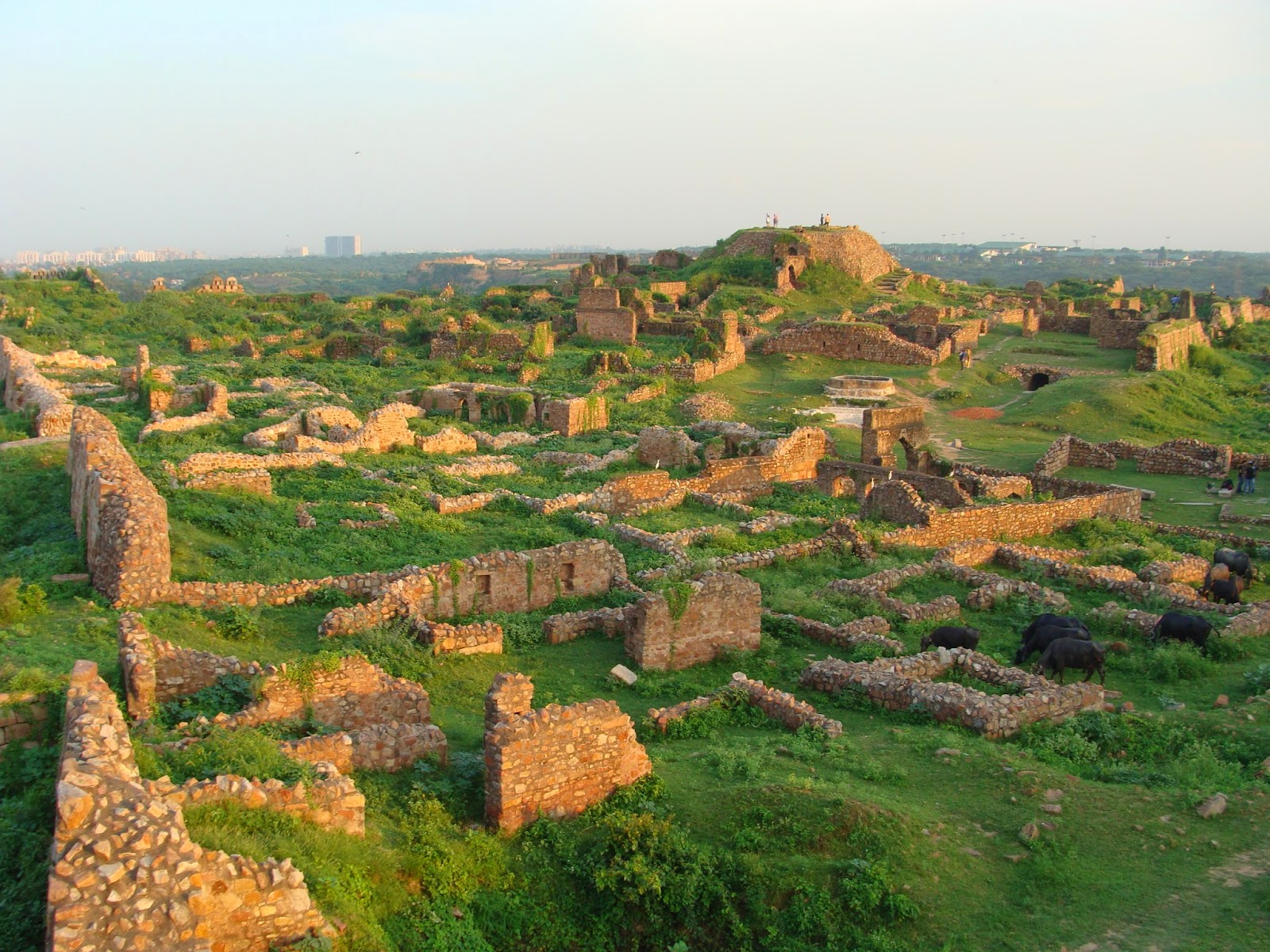
Lying in isolation, this fort is in an extremely deplorable condition. It’s crumbling, yet massive ramparts standing a silent witness to a change its builders could never have thought. The Tughlaqabad Fort was built by Ghiyas-ud-din Tughlaq, the founder of the Tughlaq dynasty. The fort is spread over an extensive area and a piece of architectural genius. I saw the walls of the fort when I was passing through that area and then I decided that I have to visit this place. Its architectural beauty is very well defined in William Dalrymple’s book (the famous travel writer).


Legend says that this place is cursed. For completing this fort Ghiyas-ud-Din ordered that all the workers of Delhi to work for this fort. This drew the rage of the Sufi saint, Hazrat Nizamuddin Auliya, who found work on his baoli (well) interrupted. And hence he cursed this fort, saying, “May the fort remain unoccupied, or else may herdsmen live here.”
True to this, today fort is just a mere ruin. 

      Safdarjung Fort
The fort’s architecture resembles the structure of Humayun’s Tomb. First time I went there was because it used to house the office of Archaeological Survey of India and had to interview an officer there. Till that time even I had no idea about this fort. Known as the “The Last Flicker in the Lamp of Mughal Architecture”, this monument is not visited by many tourists today as most of us don’t know about it. I am sure it is not even listed in many websites that show places to visit in Delhi. This magnificent monument was completed in 1754 as a memorial of Mirza Muqim Abul Mansur Khan, popularly known as Safdarjung by his son Nawab Shuja-ud-Daulah of Awadh. Located in the in the western end of Lodhi road, it is lying unnoticed there.


      Jamali Kamali

The Jamali Kamali mosque and tomb is located on the Mehrauli road. The mosque was built in 1528-29 during the rule of Babur. Named after the famous Sufi saint Jamali and his not so know disciple Kamali, this place is quite isolated. Other than the localites who came here with their herds and a guard, I hardly found anyone there. The most surprising story about this place is that it is haunted. Though I did not experienced anything like that. I only felt one thing and that was how badly this place has been ignored. 


Monday, April 21, 2014

The Lake Tour, Nainital

The Lake Tour

The motive behind most of my vacations are to visit as many places as I can. But often due to lack of time, I end up visiting too many places in one trip. Last time, I thought I need to go to a place where I can relax and just relax. Hence, relaxation was the major agenda of my last vacation. I had an extremely busy and maddening life at my office last year hence a relaxing vacation was the need of the hour. Nainital being one of the nearest hill stations from Delhi, I opted to go there. This was my first trip to Nainital. And I must say it was worth it.

We decided to start our trip from the lake tour. The lake tour includes- The Naini Lake, The Saatal, The Bhimtal and Naukuchiataal. We started our lake tour from the Nainital Lake, which is about 67 ft deep and a preferred place for boating and yachting for all. Since the lake in eye shape, it is named as Naini Lake. True to its popularity the lake is wonderfully stunning. The lake is surrounded by hills, cosy cottages and villas peeping from the plants of the hills and when all these reflect in the lake, it is a sight to behold. We did the boating there that was for a small duration of half an hour.


Then we crossed a small lake which is a part of Satal, Garud Tal is unheard of by most of the tourists. It is just few kilometers before Sattal. Though there is no boating facility there, we decided just to take a look at the lake. The lake looks abandoned as there were no one there. Our driver said this lake is considered haunted. However I found it serene and beautiful. Moreover, I sighted a old church across the lake. However we stayed there for 15-20 minutes clicking photos and then left for next destination.


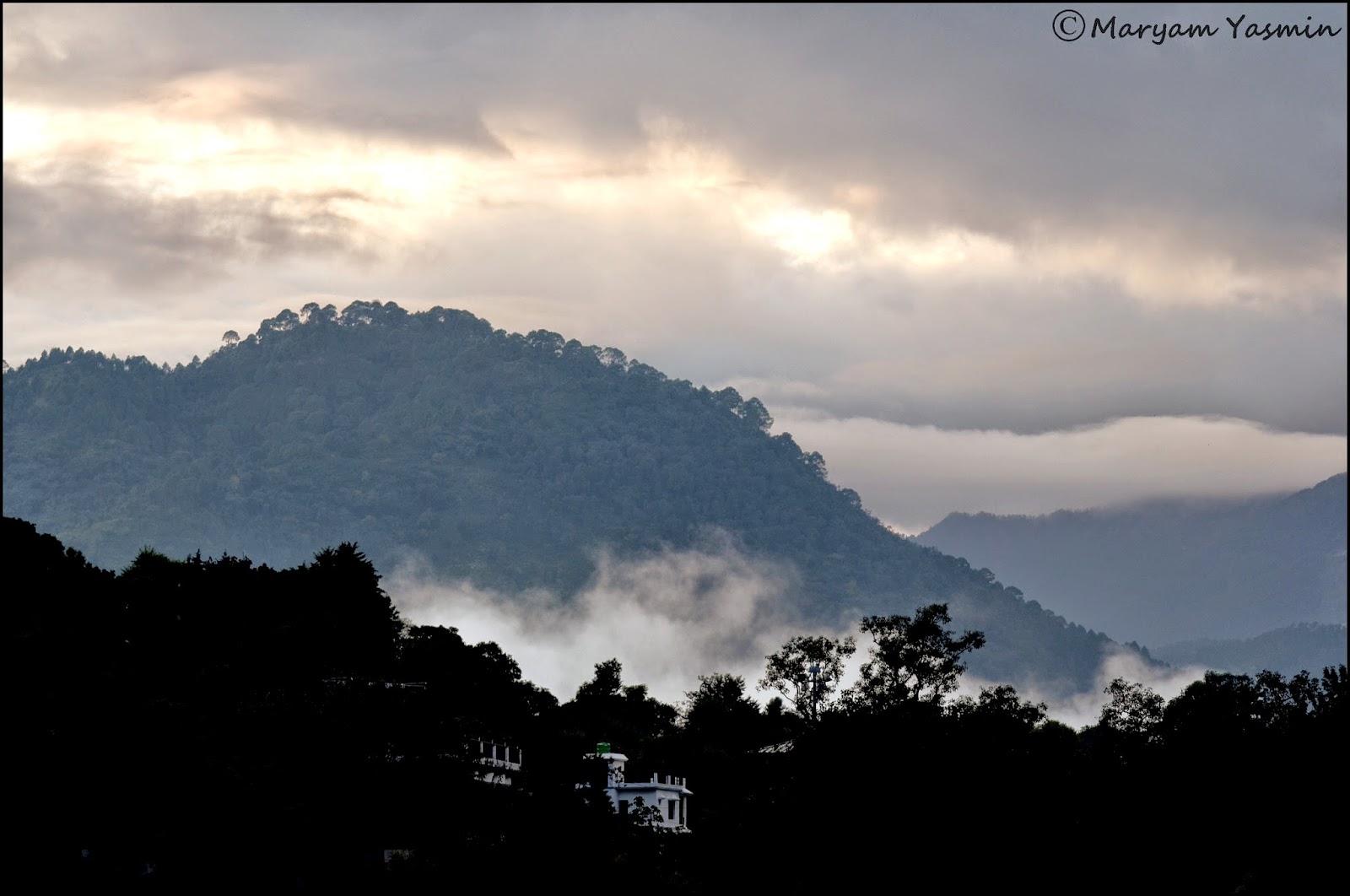
Our next destination of Lake Tour was Sattal. Located at a distance of around 23 km, from Nainital, it is personally my favourite lake among all four lakes. Sattal is a group of seven interconnected freshwater lakes grouped close to each other. The names of the seven Lakes of Sattal are Panna Tal, Purna Tal, Sita Tal, Ram Tal, Nal Damyanti Tal, Laxman Tal and Sukha Tal. Personally my favourite lake among all four lakes, it is simply breathtaking. The best part of this lake is that it is amidst the forest and and hills. Wherever you will take your eyes, there is greenery, clouds, hills and most importantly it is extremely peaceful.  The peace and serenity of the places just makes it a perfect place to relax. All you can hear is the soft sound of water and chirping of birds. Clear water of lakes surrounded by thick forest and sound of birds is a brilliant experience. We were truly in the lap of nature.


It was an amazingly de-stressing and rejuvenating boat ride.  Moreover we were able to get a glimpse of some beautiful birds. Kingfisher and Hornbill were two most beautiful birds that we was saw there. These lakes are home to migratory birds.  And beside the birds, it is said that it houses an unbelievable 525 species of butterflies and over 11000 species of insects including beetle, bugs and moths and a variety of flora including rare medicinal herbs and shrubs. I left the place with a thought that I will visit the place soon. I will come for a weekend and spend my whole weekend there doing nothing other than clicking photos and watching birds.


Just 5 kilometres from Sattal lies Bhimtal. After enjoying an amazing beauty of Sattal, Bhimtal was not that peaceful. It is more urban in nature. The lake has an island in the middle, which boasted of a restaurant earlier but now an aquarium has been set up with exotic varieties of fishes from countries like South Africa, Mexico and China. Bhimtal is the biggest lake around Nainital. We had a quck lunch there and then moved to our final destination in Lake Tour and that is Naukuchital.


Naukuchiatal Lake is about 130 ft. deep and is a nine cornered lake. We ordered two cup of tea and a spicy Maggie before going to boat. The lake is quite serene and so are its surrounding hills which are covered by forested green on all sides. It is believed that who so ever sees all the nine corners of the lake in one shot will attain Nirvana. This place is also apt for adventure lovers, as activities like trekking, paragliding and angling are done here. It is the deepest of all the lakes in the Nainital region. The lake is fed by an underground perennial spring.


Naukuchital was the last lake in our lake tour. Then we headed back to Nainital enjoying the cool breeze of late evening, the whole day was simply amazing. Rejuvenating and de-stressing will be the perfect words to define this day.


Saturday, August 17, 2013

LUCKNOW

LUCKNOW- The City of Nawabs

I thought I will not write this post until and unless I visit this city completely. But I could not stop myself. Moreover, this is the only city I visited this year. Popularly known as the City of Nawabs, Lucknow is definitely in my list of places to visit in India.  But I did not go there to visit the place as such. I went there for some other purpose, but managed to get glimpse of some of the famous places there. I will go there again and write another detailed post on the city. But till that time I will just jot down some great things about this amazing city.

The Railway Station of Lucknow

The city is a perfect mixture of tahzeeb (cannot find an English word that is closest to it) and modern amenities. There is a thahrav (stability) in this city and at the same time it is not like any other small city of India. What makes this city a worth visit is- its distinct monuments, royal cuisines and the historic buildings. The two great places that I managed to visit in my short span of time I was there was- Bara Imambaara and Chowk.

The Asif Mosque

The Asif Mosque


Built by Asaf-ud-Daulah, Nawab of Lucknow in 1784, Bara Imambaara is also called the Asaf Imambara. Blessed with beautiful architecture, it is supported by a Mosque and Baoli in its left and right. But the most interesting part of this monument is that it was build as a part of a relief project for a major famine that took place in the year 1784.

The Bhul Bhulaiya inside the Bara Imaambara
The Bara Imambaara is known for its incredible maze called Bhulbhulaiya. This is located in the upper floor of the monument. A stairway leads to this level. One can view a scenic panorama of the city from the top of this monument, which is absolutely breath-taking. The Bhulbhulaiya is a must see and the best way to find your way out without getting lost is by hiring a guide. It is said that great treasures are hidden in these secret tunnels of this maze. The monument remains open from morning 6am to evening 5pm.

Entrance of Bara Imaambara

The two inseparable part of this amazing city is- its Chikan Embroideray and Tunday Kabab. Good quality textiles with exquisite form of embroidery can be purchased from the city and I definitely grabbed the chance and bought kurtas of Chikan from Chowk. Chowk is a local market in Lucknow known for Chikan shops. Tunday kabab is something I just loved hogging. But unfortunately I could not have it because of lack of time. So, next time whenever I will go there I will make a proper plan and then visit the whole city properly. So, till then I will try to be satisfied with my short trip.